Creator-indies are here, and doing something not seen since E.T. What’s the opportunity for kids media?
Creator-led films are having their time - is it luck, or payoff for years of grind?

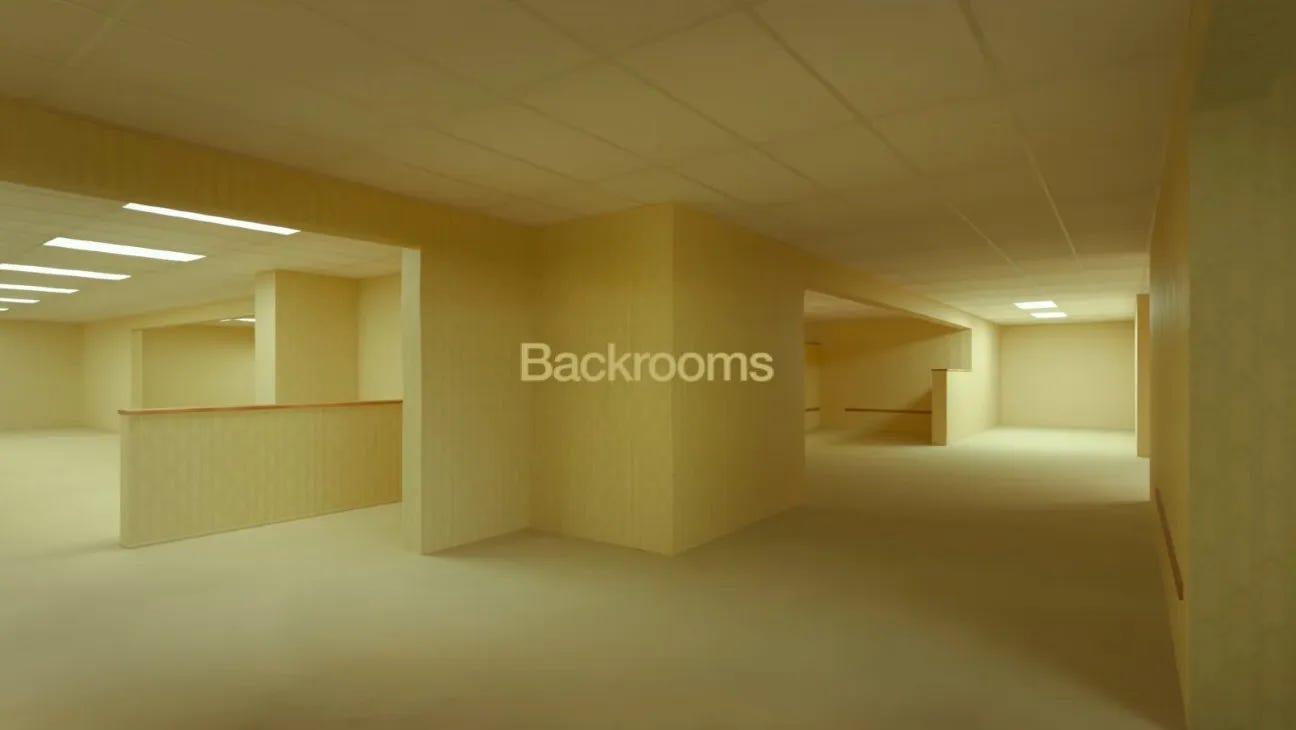
This week: Jo and Andy take their host hangout into the conversation rolling across LinkedIn. Two creator-made films, Backrooms by Kane Parsons and Obsession by Curry Barker, are pulling audiences into cinemas in a way that Hollywood has not managed for years. Obsession was made for $750,000 and is the first since E.T. to grow their theatrical audience across three successive weekends. Together with Backrooms, Andy and Jo argue that this is not about filmmaking but instead about trust, built slowly across years of creators showing up for an audience long before commercial sense would say they should.
This newsletter transforms the podcast into an analysis you can read at your leisure. You can find the Kids Media Club podcast on the usual audio platforms and YouTube, where we go deep on breaking news and how kids media is evolving in real-time.
TRUST - the provenance the fan needs
Kane Parsons built his fanbase as a teenager during the pandemic when he used Blender to create found-footage videos about “The Backrooms”. He continued releasing grainy shorts when most people would have walked away. Curry Barker also spent years growing his audience steadily, hence reading these stories as overnight successes misses the part where the creator showed up to one follower, then ten, then a hundred. That is where the trust accumulates.
We used to trust the BBC to bring us the best kids content. We used to trust Sky Sports as the best way to bring us the football. The shift Andy spelled out is that a generation now trusts creators more than the institutions that used to deliver the same stories. When the trust is real, fans will follow a creator into a new medium without needing convincing. They turn up to a cinema because the creator asked them to.
Parasocial relationships the studios cannot replicate
There have been waves of indie filmmakers before. Hollywood has on occasion pulled talent from outside the system because they spoke the language of the audience. What they did NOT have was ownership of the audience relationship. Studios distributed, promoted and packaged, the audience belonged to the studio.
This wave is different. Kane Parsons and Curry Barker built their fanbases one user comments at a time, pored over their YouTube analytics, watched what landed and acknowledged the signals coming back. When a film hits theatres, the audience already exists, trusts the creator and already feels invested in the creative journey.
MrBeast is the wrong example
The first reaction to the broader question of creator power in TV and film often cites MrBeast and Beast Games on Amazon. Reports suggest season two did not perform as Amazon will have hoped, yet MrBeast is not the standard measure. On over 400 million subscribers, he has effectively become the kind of corporate operation his audience once rooted against. The trust mechanism that works at a million subscribers does not appear to scale to 400+ million.
Curry Barker, by contrast, sits at just over a million subscribers and his is a creator-fan relationship that still feels personal. He sits in the ‘goldilocks zone’ where a creator can ask their audience to do something specific and expect a response.
Fandom as co-creation, not consumption
Backrooms began as internet lore shared between fans, each adding a layer, each contributing to a creative sandpit anyone was invited to play in. Every comment that shaped a piece of the world is a small investment from a fan. When the film arrived in cinemas, the fans who had helped build the world bought tickets because, in a real sense, they had earned a stake in the story.
Markiplier’s Iron Lung followed the same pattern. He talked openly for years about wanting to turn the game into a film. Fans encouraged him in the comments. When the film was looking for wider release, it is rumoured that his audience called their local cinemas to ask for screenings. That is not merely promotion, that IS distribution.
The kids media problem
The participation that made Backrooms possible is exactly what kids and teens media is shut out of by design. YouTube does not allow comments on Made for Kids content. The high wall built around younger audiences, driven by COPPA, also locks them out of the creative sandpits where this kind of fandom is born.
Zigazoo is one of the few platforms that has tried to solve this from first principles, we spoke to Ashley Mady on the podcast about this very thing. Children want a two-way participatory relationship with the IP they love and that instinct is not going back in the bottle. So the broader question is whether the industry and regulators can land on a model that protects them while letting them play.

Roblox is the next test
20th Century Studios has acquired the rights to 99 Nights in the Forest, the Roblox survival experience that has sustained its audience into 2026. Grow A Garden, which has since fallen away from its peak also has an adaptation in the works. Yet the lag may be a problem, a film takes 12 to 18 months at least. The Roblox audience moves faster than that.
But 99 Nights in the Forest comes from developers its players care about, in the same way Kane Parsons and Markiplier audiences care about their creators. The Minecraft movie proved that a relatively simple game loop can produce a film that mobilises young audiences into cinemas. If Fox can move quickly, 99 Nights in the Forest may be the kids version of the Backrooms moment, with Roblox developers mobilising younger fans into theatres at scale.
The Sidemen generation may write the next Bob the Builder
The final beat of the episode sits with what happens next. Inspired by KSI leaving the Sidemen, Jo discussed how creator groups growing up and having children of their own gives them a unique opportunity to spawn new kids ideas.
When a generation of creators with deep, trusted fan relationships start making content for their own kids, the industry will see a different kind of kids IP coming through. Keith Chapman gave us Bob the Builder and Paw Patrol from a specific creative worldview. The next Keith Chapman is more likely to come from a YouTube channel than from a traditional development pipeline. Will kids media makes space for them, or will they have to do it their own terms?
Listen to the full Kids Media Club podcast episode for the conversation between Jo and Andy on Backrooms, Obsession and creator-led storytelling. Connect with us at www.kidsmediaclubpodcast.com or find Jo Redfern, Andy Williams and Emily Horgan on LinkedIn.